
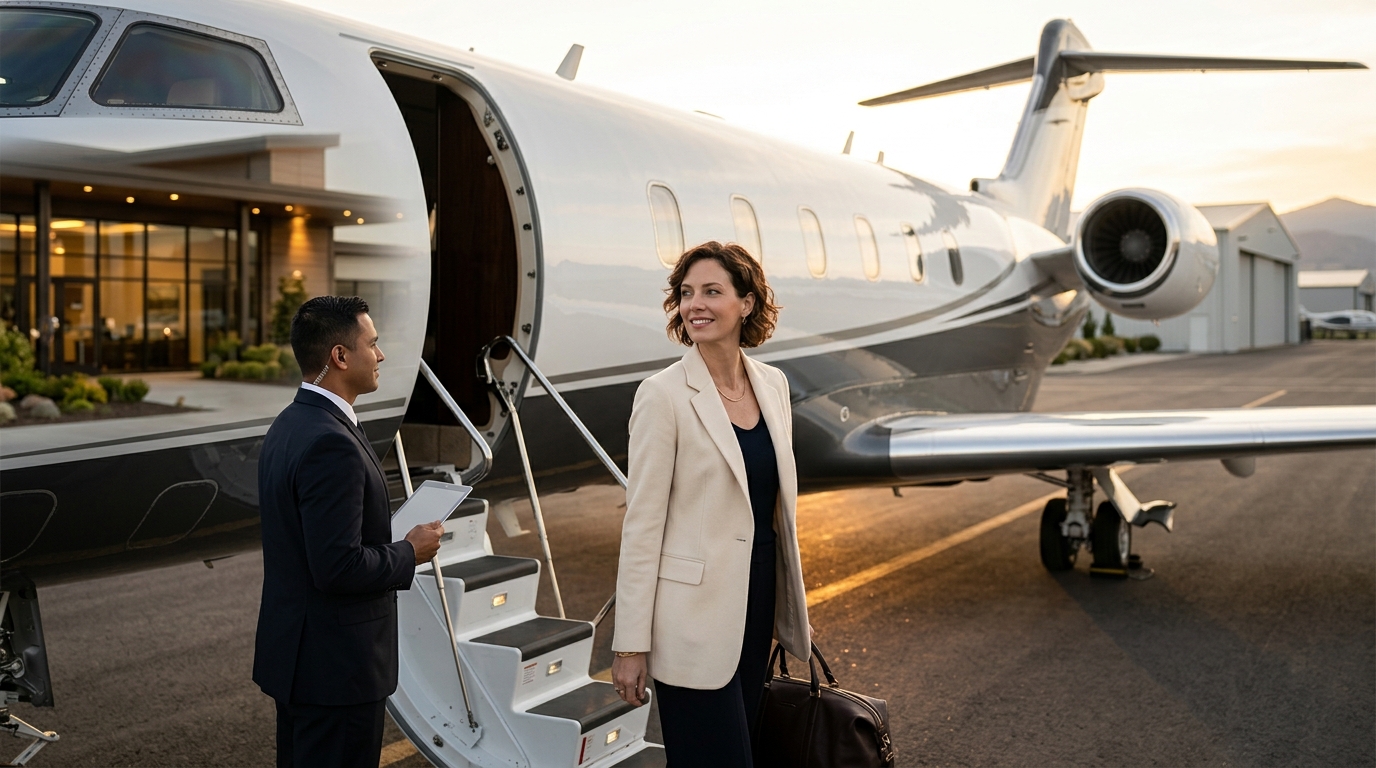
Private aviation is no longer reserved for a narrow elite. Record flight volumes, new access models, and a shifting traveler demographic have turned private jets into a strategic lifestyle tool. Below, Zephyr Jets breaks down the concrete benefits that make private jet travel the gold standard for luxury journeys—backed by the latest industry data.
1. Dramatic Time Savings on Every Trip
The single most measurable advantage of flying private is how much time you reclaim. Industry research shows private jet travelers save an average of 127 minutes per flight compared to commercial aviation through streamlined ground processes and direct routing. On a round-trip basis, that gap compounds quickly.
Private passengers typically arrive just 15–20 minutes before departure and walk directly to the aircraft—no kiosks, no TSA queues, no boarding zones. For multi-leg business trips, private jets can reduce total travel time by 30% to 50%, enabling back-to-back meetings across cities without commercial delays. Over a full year, frequent flyers logging 400 hours annually can save between 800 and 2,000 hours—the equivalent of up to 2.5 months of reclaimed time.
Door-to-door, some trips that take 12 hours commercially can shrink to just 3.5 hours when you fly private. That's not a marginal improvement—it's a fundamentally different way to move through the world.
2. Unmatched Schedule Flexibility
Commercial airlines optimize schedules around load factors and hub economics. Private aviation flips that model: the flight schedule is built around your personal needs, not around maximizing profitability for the airline. Departure times can be shifted, routes modified, and aircraft types adjusted—sometimes within hours.
This adaptability is particularly valuable for multinational corporations managing complex, multi-stop itineraries. VistaJet reported that corporate requests for private charters surged threefold in the first half of 2025, driven largely by demand for flexible scheduling and multi-leg mission planning. Whether it's an early morning departure or a last-minute change of plans, a private jet ensures you remain in control of your time.
3. Total Privacy and Security
In both business and leisure contexts, privacy is a non-negotiable benefit of private jet travel. Commercial flights expose travelers to potential eavesdropping, data leaks, and constant distractions. Private jet charter provides a fortified environment where confidential conversations can unfold without compromise.
You control the cabin entirely, allowing for uninterrupted discussions on mergers, strategies, or proprietary information. Features like soundproofing, dedicated workspaces, and vetted crews ensure your talks stay private. For ultra-high-net-worth individuals, this privacy extends to personal travel—protecting family comfort and personal security alike.
The World Luxury Chamber of Commerce's 2026 Travel Trends Report puts it directly: for high-net-worth individuals, privacy has become a necessity, not a perk.
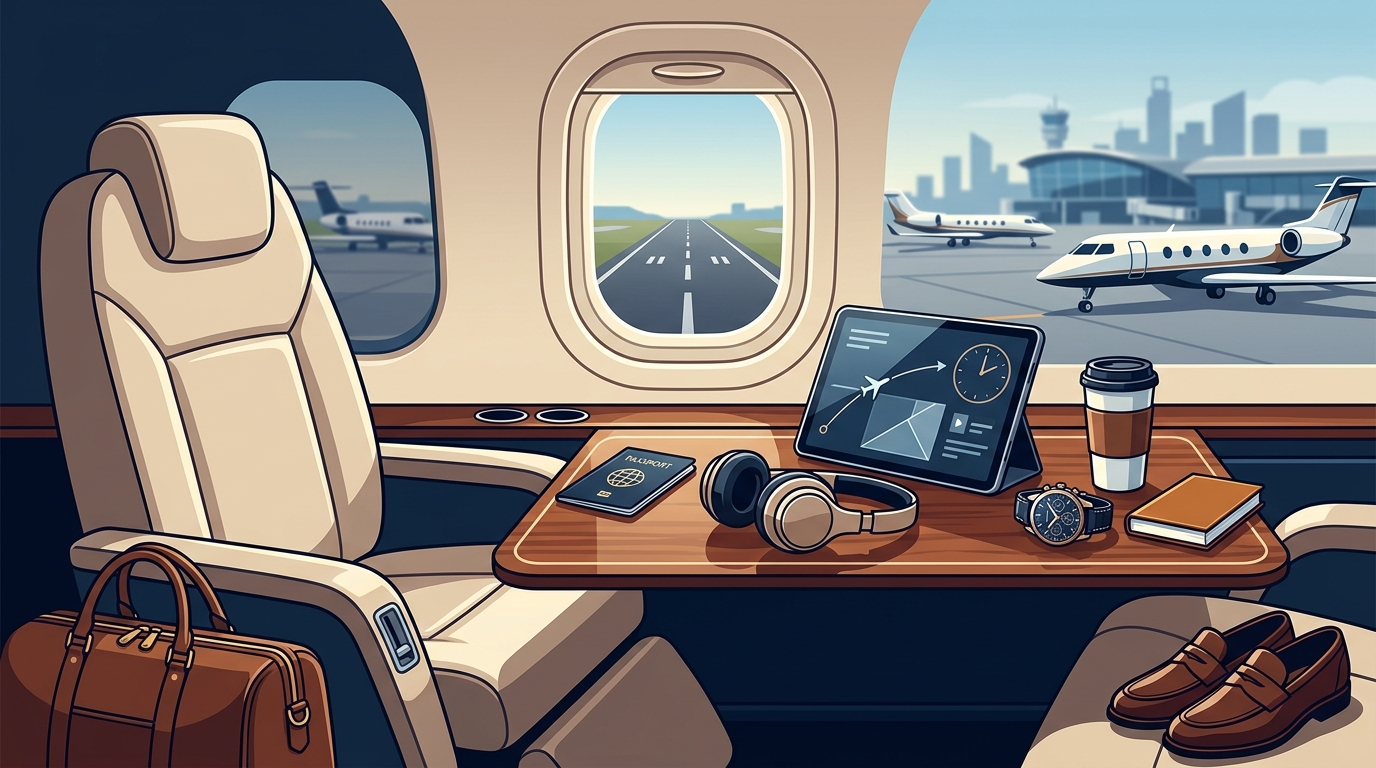
4. Superior Cabin Comfort
Modern private jet cabins are designed as flying luxury suites. In 2026, aircraft interiors are equipped with AI-driven systems that adjust lighting, temperature, and seating configurations based on passenger behavior and flight phase. Cabin layouts are fully customizable depending on passenger requirements—whether for business meetings, family travel, or leisure.
From handcrafted leathers to carbon-fiber interior panels, customization options are nearly unlimited. Refreshed air systems and circadian lighting align with your body's natural rhythms, while higher altitude flying with less turbulence means long flights feel less tiring because the cabin environment actively supports rest and focus.
5. Access to 10× More Airports
One of the most underappreciated benefits of private aviation is the sheer number of airports available to you. In the United States alone, there are over 5,000 airports accessible to private jets compared to roughly 500 that serve commercial flights. In Europe, private aircraft can use around 3,000 airports versus approximately 300 for commercial carriers.
This means you land closer to your meeting, your resort, or your home—bypassing traffic-heavy metropolitan hubs entirely. Combined with nonstop routing, airport access alone can eliminate hours of ground transportation on every trip.
6. In-Flight Productivity
A private jet functions as a secure mobile office. Executives can hold confidential meetings, review sensitive presentations, and conduct video calls without distraction. Unlike crowded commercial cabins, the private environment enables genuine deep work.
Businesses using private aviation report increased efficiency, with executives avoiding downtime and requiring fewer recovery days post-trip. For professionals whose time generates revenue—doctors, attorneys, consultants, executives—every productive hour in the air directly offsets the cost of the flight.
7. Hyper-Personalized Experiences
Personalization in private aviation now extends far beyond catering. Operators store traveler preferences for future flights, creating consistency and comfort without repeated requests. From ground transportation and hotel arrangements to in-flight entertainment and dietary requirements, the entire journey is tailored to you.
Fully curated around-the-world trips by private jet—lasting between 20 and 24 days with themed itineraries—represent the pinnacle of this trend. Custom aircraft configured with limited seating provide a hotel-like atmosphere with lounge areas, bespoke dining, and concierge service, with all ground transport, excursions, meals, and accommodations included.
8. Reduced Travel Fatigue and Health Benefits
Travel fatigue is a silent productivity killer. Long queues, cramped seats, and irregular schedules on commercial flights leave travelers drained, impacting focus and performance for days afterward. Private jet travel mitigates this by offering a more restful, controlled experience.
Lower cabin altitude pressurization on many private aircraft (equivalent to 4,000–6,000 feet versus 6,000–8,000 feet on commercial planes) means less dehydration and jet lag. For families, private travel eliminates the stress of navigating congested airports with children, making short getaways not just feasible but genuinely relaxing.
9. Industry Momentum: The Numbers Behind the Boom
Private aviation's benefits are reflected in surging market demand. The private jet charter market is valued at approximately $17.67 billion in 2026 and is on course to reach $25.79 billion by 2031. Flight activity is running 32% above pre-pandemic levels, with a global fleet of over 24,000 aircraft.
In 2025, private jet travel hit an all-time record for both global and U.S. departures. The number of first-time private flyers increased by 21% from 2022 to 2024, and the average age of fractional jet owners has dropped by a full decade since the pandemic. Younger professionals, bleisure travelers, and first-time flyers are reshaping the market from a niche luxury into a flexible, productivity-focused mode of transport.
10. Modern Access Models Make It More Attainable
You no longer need to own an aircraft outright to enjoy these benefits. Charter platforms, jet cards, fractional ownership, and subscription models have made private flying more accessible than ever. Digital booking systems allow instant pricing comparisons and aircraft selection, and strategies like empty-leg flights can significantly reduce costs.
For most business travelers, chartering is more economical than ownership—especially for those flying fewer than 200–300 hours annually. Charter rates in 2026 range from approximately $1,500 to $28,000 per hour depending on aircraft type, meaning a light jet for a short regional hop can be surprisingly competitive with premium commercial fares when costs are shared among a small group.
At Zephyr Jets, we help travelers match the right access model—charter, jet card, or membership—to their specific travel patterns and budget, ensuring every flight delivers maximum value.
Key Takeaways
- Time is the primary ROI: Private jet travelers save 4–9 hours per trip and up to 2.5 months per year for frequent flyers.
- Flexibility beats fixed schedules: Depart on your terms, modify routes mid-plan, and access 10× more airports than commercial carriers.
- Privacy is now a necessity: Secure cabins enable confidential work and family comfort without compromise.
- The market is booming: A $17.67 billion industry in 2026, growing toward $25.79 billion by 2031, with record first-time flyers.
- Access models lower the barrier: Charter, jet cards, and subscriptions mean you don't need to own an aircraft to fly private.
- Comfort drives performance: Reduced fatigue, personalized cabins, and in-flight productivity translate into measurable business results.
Frequently Asked Questions
How much time do you actually save flying private?
On average, private jet travelers save about 127 minutes per flight over commercial aviation. For a full trip including ground processes, savings range from 4 to 9 hours. Frequent flyers can reclaim up to 2.5 months of time per year.
Is private jet travel only for billionaires?
Not anymore. The number of first-time private flyers increased 21% from 2022 to 2024. Charter platforms, jet cards, and empty-leg flights have made private aviation accessible to a much broader range of business professionals and leisure travelers. Charter rates start at roughly $1,500 per hour for light jets.
What are the main advantages of flying private versus commercial first class?
Even the best commercial first class cannot match private aviation's schedule flexibility, access to 5,000+ airports, total cabin privacy, direct routing without layovers, and the ability to depart within minutes of arrival. Private jets also function as secure mobile offices for sensitive business discussions.
How big is the private jet market in 2026?
The private jet charter market is valued at approximately $17.67 billion in 2026, with projections to reach $25.79 billion by 2031. Flight activity is 32% above pre-pandemic levels globally.
What is the most cost-effective way to fly private?
For occasional travelers, on-demand charter or empty-leg flights offer the best value. Frequent flyers benefit from jet cards or membership programs that lock in hourly rates. Fractional ownership suits those flying 200+ hours per year who want guaranteed availability without the full burden of aircraft ownership.
Can private jets fly nonstop on long international routes?
Yes. Ultra-long-range aircraft like the Gulfstream G650ER and Bombardier Global 8000 can fly 12 to 16 hours nonstop, connecting cities like New York to Dubai or London to Singapore without refueling stops.