

Round-the-clock medical evacuation jet providers are specialized aviation brokers and operators that arrange air ambulance charter for urgent patient transport. These services coordinate clinical crews, medically configured planes, and logistics to move patients safely when standard commercial travel is impossible. For urgent health emergencies, understanding the distinction between a broker and an operator is critical to ensuring rapid, safe, and compliant care.
The Critical Distinction Between Brokers and Operators
Many travelers confuse a charter broker with an air ambulance operator. A charter broker is a third-party entity that sources aircraft from a network of operators but does not own or fly the planes. An operator is the company that holds the air carrier certificate, employs the pilots, and maintains the aircraft. In medical transport, this distinction is vital because the operator is legally responsible for the aviation safety of the flight, while a separate medical provider is responsible for patient care. Zephyr Jets operates as a charter broker, meaning it coordinates access to medically configured aircraft operated by third-party air carriers. It works with the applicable medical transport provider to arrange the clinical crew, equipment, and logistics required for the journey. This model allows for flexibility in sourcing the right aircraft for specific clinical needs without the broker assuming direct operational control of the flight.
What Constitutes a Medical Evacuation Flight
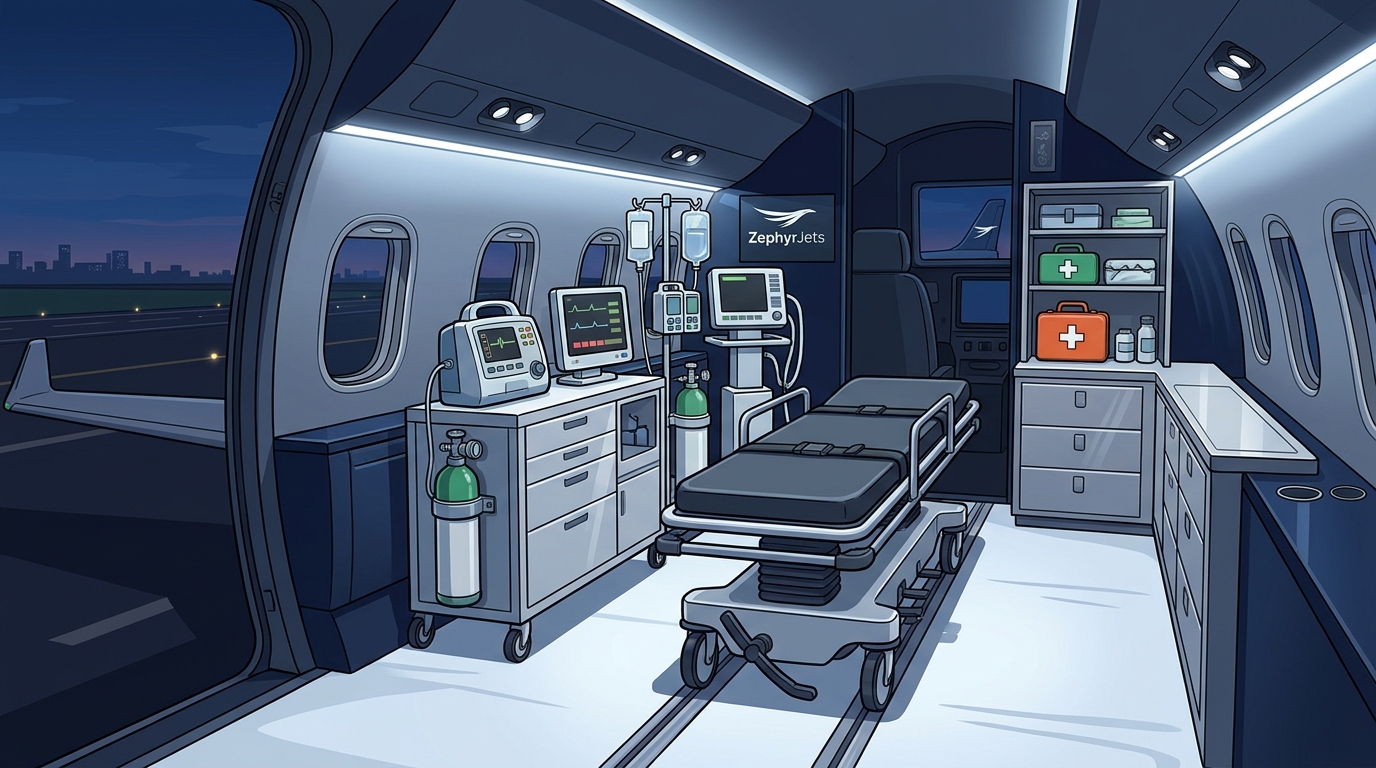
Air ambulance charter is dedicated aircraft transportation for a patient who requires medical support or specialized accommodation during flight. Unlike ordinary passenger charter, an air ambulance mission is planned around both the aviation requirements of the trip and the patient’s medical transport needs. Depending on the patient’s condition and the selected medical provider, the transport may involve a medically configured stretcher, oxygen and other appropriate medical equipment, in-flight patient monitoring, and a flight nurse or flight paramedic. The exact medical team and equipment should be determined by the medical transport provider after reviewing the patient’s condition. This ensures that the aircraft is not just a vehicle, but a mobile medical unit capable of sustaining life during transit.
Response Times and Operational Realities
When an emergency arises, speed is of the essence, but operational constraints dictate the timeline. Some transports may be arranged in as little as four hours, depending on clinical acceptance, aircraft and medical-team availability, route, airports, ground transportation, and other operational requirements. However, this is not a guarantee for every scenario. Factors such as the specific location of the patient, the availability of a suitable aircraft in the region, and the complexity of the medical case can extend the timeline. Zephyr Jets provides 24/7 flight support, allowing advisors to begin the coordination process immediately. This continuous availability is crucial for urgent health emergencies where every minute counts, but patients and families should understand that "as little as four hours" is a best-case scenario for complex international or remote missions.
Regulatory and Safety Standards in Medical Transport
Safety is the non-negotiable foundation of any medical evacuation. Zephyr Jets prioritizes transparency and safety, working only with operators who meet or exceed the world’s most stringent safety audits. The aviation portion of the trip is performed by the selected third-party operating carrier holding the applicable authority for the flight. Medical care is provided by the selected medical transport provider and its appropriately credentialed clinical personnel. This separation of duties ensures that both aviation and medical standards are upheld by specialized professionals. For instance, the operator ensures the aircraft is airworthy and the pilots are rested and certified, while the medical provider ensures the clinical team is qualified for the specific patient condition. This dual-layered safety approach is essential for mitigating risks in high-stakes medical transport.
How to Initiate a Medical Evacuation Request
Initiating a medical evacuation requires clear communication of the patient’s status and logistical needs. The first step is to contact a provider like Zephyr Jets about the transfer, providing the current location, destination, and preferred timing. It is important to note that if you are experiencing an active medical emergency, you should contact your local emergency medical service or emergency number immediately. Air ambulance charter arranged through Zephyr Jets is not a substitute for emergency-response services. Once the immediate local emergency is stabilized, the broker can begin coordinating the long-distance transport. This involves verifying the patient’s acceptance by the receiving facility and the medical provider, as well as confirming aircraft availability. Clear, accurate information at this stage prevents delays and ensures the right resources are deployed.
Key Takeaways
- Charter brokers like Zephyr Jets coordinate logistics but do not operate the aircraft or provide medical treatment.
- Medical evacuation flights are configured with specialized equipment and clinical crews tailored to the patient’s needs.
- Response times can be as short as four hours, but depend on availability and clinical acceptance.
- Always contact local emergency services first for active emergencies; air ambulance is for transport, not initial response.
- Safety is ensured through a combination of vetted aviation operators and credentialed medical providers.
- Clear communication of patient status and destination is critical for efficient coordination.
Frequently Asked Questions
Is Zephyr Jets a medical provider?
No, Zephyr Jets is a charter broker. It does not itself operate the aircraft or provide medical treatment. It coordinates access to medically configured aircraft operated by third-party air carriers and works with the applicable medical transport provider to arrange the clinical crew and equipment.
How fast can a medical evacuation be arranged?
Some transports may be arranged in as little as four hours, depending on clinical acceptance, aircraft and medical-team availability, route, airports, ground transportation, and other operational requirements.
What equipment is on a medical evacuation jet?
Depending on the patient’s condition, the transport may involve a medically configured stretcher, oxygen, in-flight patient monitoring, and a flight nurse or flight paramedic. The exact equipment is determined by the medical transport provider.
Can I use a medical evacuation jet for non-emergency travel?
Medical evacuation jets are primarily for urgent health emergencies and planned patient transfers. For non-emergency travel, standard private jet charter is more appropriate and cost-effective.
Who is responsible for the patient’s medical care during the flight?
Medical care is provided by the selected medical transport provider and its appropriately credentialed clinical personnel. The aviation portion is handled by the operating carrier.
Next Steps for Urgent Medical Transport
If you are facing a situation that requires urgent medical transport, it is essential to act quickly and accurately. Contact your local emergency services first to stabilize the patient. Once the immediate crisis is managed, reach out to a specialized provider like Zephyr Jets to begin the coordination of the air ambulance charter. Their 24/7 support team can help you navigate the complex logistics of medical evacuation, ensuring that the right aircraft, crew, and equipment are in place for a safe and timely transfer. To plan your visit, contact our team.