

Understanding the true cost of private aviation is critical for executives and families who value transparency. According to industry data, empty leg flights can offer discounts of up to 75% off retail rates empty leg specials. However, standard charter quotes often mask operational complexities that inflate final invoices. This guide dissects the hidden fees and structural pitfalls in private jet pricing, providing you with the knowledge to negotiate effectively and avoid unexpected financial surprises.
Understanding Charter Pricing Basics
Private jet charter pricing is not a fixed retail price. It is a dynamic calculation based on supply, demand, and operational logistics. A charter broker is an intermediary that connects travelers with verified aircraft operators. This distinction is vital because brokers like Zephyr Jets do not own the aircraft but leverage a network of over 3,500 aircraft to find the best fit for your mission. (About Us Zephyr Jets)
The base rate typically covers the aircraft rental, pilot fees, and standard operational costs. However, the final invoice is a sum of many variable components. Without a clear understanding of these variables, travelers often face invoices that exceed initial estimates by significant margins. Transparency is the primary defense against these surprises. (Private Jet Charter Flights)
Fuel Surcharges and Market Volatility
Fuel is one of the largest variable costs in aviation. Jet fuel prices fluctuate daily based on global crude oil markets and regional availability. According to recent energy reports, jet fuel prices can vary by over 20% within a single quarter energy market data. Many operators include a fuel surcharge in their quotes, which is calculated based on the current price of Jet-A fuel at the departure airport.
The pitfall here is the timing of the quote. If fuel prices spike between the time you receive the quote and the time you book, the final price may increase. To avoid this, always confirm whether the quote is "fuel-fixed" or subject to change. Zephyr Jets provides itemized quotes that clearly separate the base charter rate from the fuel component, ensuring you know exactly what you are paying for.
Landing Fees and Airport Costs
Landing fees are charged by the airport authority for using their runway and facilities. These fees vary wildly depending on the size of the aircraft and the specific airport. Major international hubs like London Heathrow or Paris CDG charge significantly higher landing fees than smaller regional airports ICAO economic analysis. Additionally, some airports impose minimum fees that can be disproportionately high for smaller light jets.
Another hidden cost is the handling fee. This is charged by the Fixed Base Operator (FBO) that services your aircraft on the ground. FBOs provide fueling, hangaring, and passenger lounge access. While essential for comfort, these fees can add thousands to your trip. Understanding the airport's fee structure allows you to choose alternative airports that offer lower costs without sacrificing convenience.
Crew Expenses and Accommodation
For multi-day trips or long-haul international flights, crew expenses become a significant factor. According to aviation labor standards, crew members are entitled to per diems and accommodation if their duty day exceeds specific limits FAA duty time rules. These costs include hotel rooms, meals, and ground transportation for the crew.
If the crew requires an overnight stay due to flight duration or layover requirements, these expenses are passed on to the client. This is a standard industry practice but is often overlooked in initial estimates. By planning itineraries that minimize overnight stays or choosing aircraft with adequate rest facilities, you can sometimes mitigate these costs. However, safety regulations strictly govern crew duty times, so these expenses are rarely avoidable on long missions.
De-icing and Weather Delays
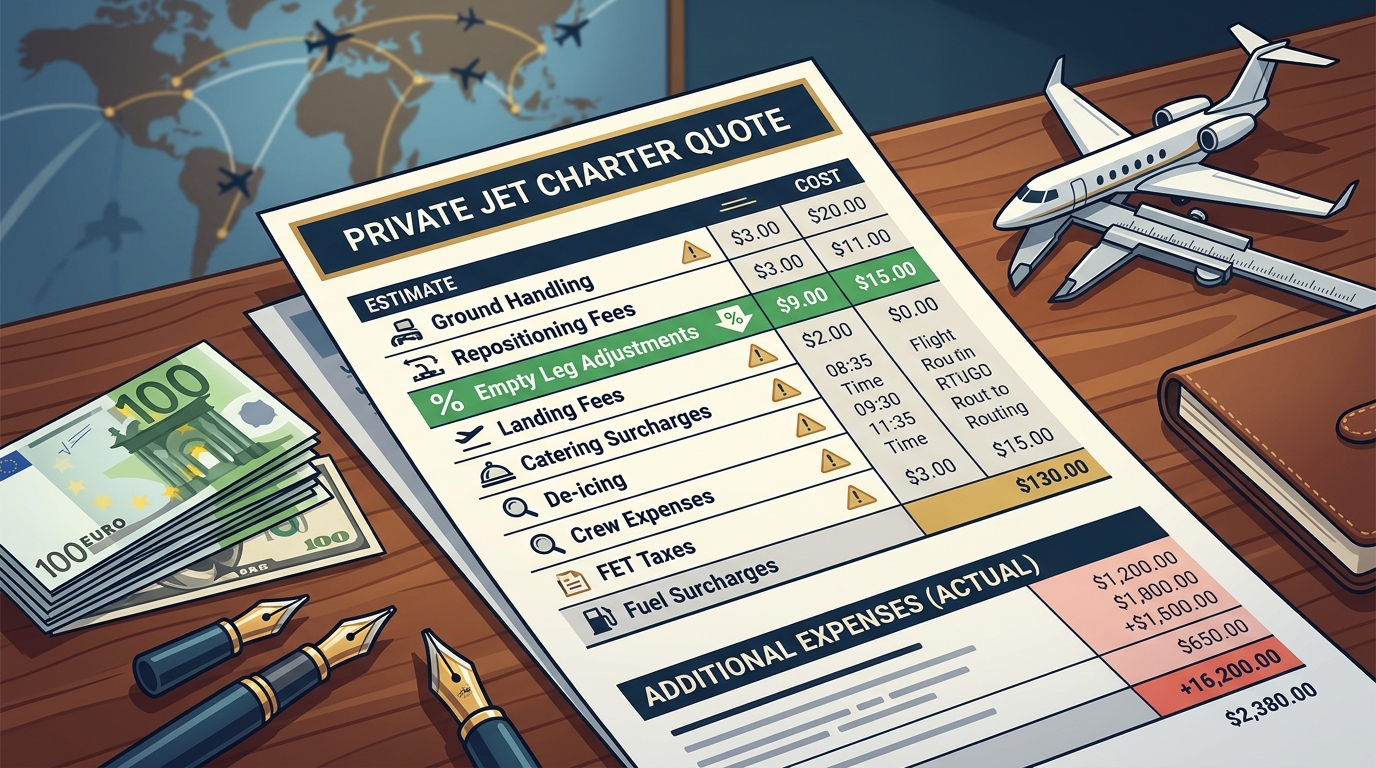
Weather is an unpredictable variable that can drastically impact your charter cost. De-icing fluid is expensive, and the process requires specialized equipment and personnel. Industry data shows that de-icing costs can range from $500 to over $5,000 per flight depending on the severity of conditions aviation weather costs. These costs are typically billed to the client if the de-icing is requested for their flight.
Furthermore, weather delays can lead to additional landing fees or crew overtime charges. If a storm forces your aircraft to remain on the ground for an extended period, you may incur hourly standby fees. While you cannot control the weather, you can mitigate these risks by booking flexible dates and maintaining open communication with your broker about weather forecasts.
Leveraging Empty Legs for Savings
One of the most effective ways to reduce private jet costs is by booking empty legs. An empty leg occurs when a jet needs to reposition for its next flight without passengers. Empty leg flights can offer discounts of up to 75% off standard retail rates empty leg specials. These flights are one-way and have fixed departure times, which limits flexibility but offers immense value.
Zephyr Jets maintains a daily list of empty leg flights, providing access to these discounted opportunities. By being flexible with your travel dates and destinations, you can secure luxury travel at a fraction of the cost. However, empty legs are subject to availability and cannot be guaranteed for specific routes or times.
Charter Cost Comparison Matrix
The following table summarizes the typical cost components and their variability in private jet charters.
| Cost Component | Typical Variability | Avoidance Strategy |
|---|---|---|
| Base Charter Rate | Fixed per aircraft type | Compare multiple operators |
| Fuel Surcharge | High (Market dependent) | Request fuel-fixed quotes |
| Landing Fees | Medium (Airport dependent) | Choose regional airports |
| Crew Expenses | Medium (Trip length dependent) | Optimize itinerary duration |
| De-icing | High (Weather dependent) | Monitor weather forecasts |
Key Takeaways
- Transparency is Key: Always request itemized quotes that break down base rates, fuel, and fees.
- Fuel Volatility: Jet fuel prices fluctuate daily; confirm if your quote is fixed or variable.
- Airport Fees: Landing and handling fees vary significantly by location; consider alternative airports.
- Crew Costs: Multi-day trips incur crew accommodation and per diem expenses.
- Weather Risks: De-icing and delay fees are real costs; monitor forecasts closely.
- Empty Legs: Flexible travelers can save up to 75% by booking repositioning flights.
- Broker Value: Experienced brokers like Zephyr Jets provide vetted operators and transparent pricing.
Frequently Asked Questions
What is the difference between a charter broker and an operator?
A charter broker, such as Zephyr Jets, acts as an intermediary that connects clients with verified aircraft operators. The operator owns and flies the aircraft, while the broker manages the logistics, sourcing, and customer service. This model allows for access to a wider network of aircraft and competitive pricing.
How are fuel surcharges calculated?
Fuel surcharges are calculated based on the current price of Jet-A fuel at the departure airport, the distance of the flight, and the aircraft's fuel burn rate. These costs are variable and can change between the quote and booking date if not fixed.
Can I avoid landing fees?
Landing fees are mandatory charges imposed by airport authorities and cannot be avoided. However, you can minimize these costs by choosing airports with lower fee structures or using regional airports that may have lower minimums for smaller aircraft.
What are empty leg flights?
Empty leg flights are one-way flights where an aircraft is repositioning for its next mission without passengers. These flights are offered at discounted rates, often up to 75% off, but are subject to availability and fixed departure times.
How does Zephyr Jets ensure pricing transparency?
Zephyr Jets provides itemized quotes that clearly separate the base charter rate from fuel, landing fees, and other operational costs. This approach ensures clients understand exactly what they are paying for and avoids hidden fees.
What happens if my flight is delayed due to weather?
If a flight is delayed due to weather, you may incur additional costs such as de-icing fees, crew overtime, or extended landing fees. Zephyr Jets monitors weather conditions closely and communicates potential risks to clients in advance.
How far in advance should I book a private jet?
While Zephyr Jets can arrange flights in as little as four hours, booking in advance allows for better pricing and aircraft selection. For peak travel periods or specific aircraft types, booking weeks or months in advance is recommended.
Book Your Transparent Quote
Avoid the pitfalls of hidden costs by partnering with a broker that prioritizes transparency and expertise. Zephyr Jets offers itemized quotes, vetted operators, and 24/7 support to ensure a seamless travel experience. Request a detailed private jet quote today and experience the difference of true transparency.