
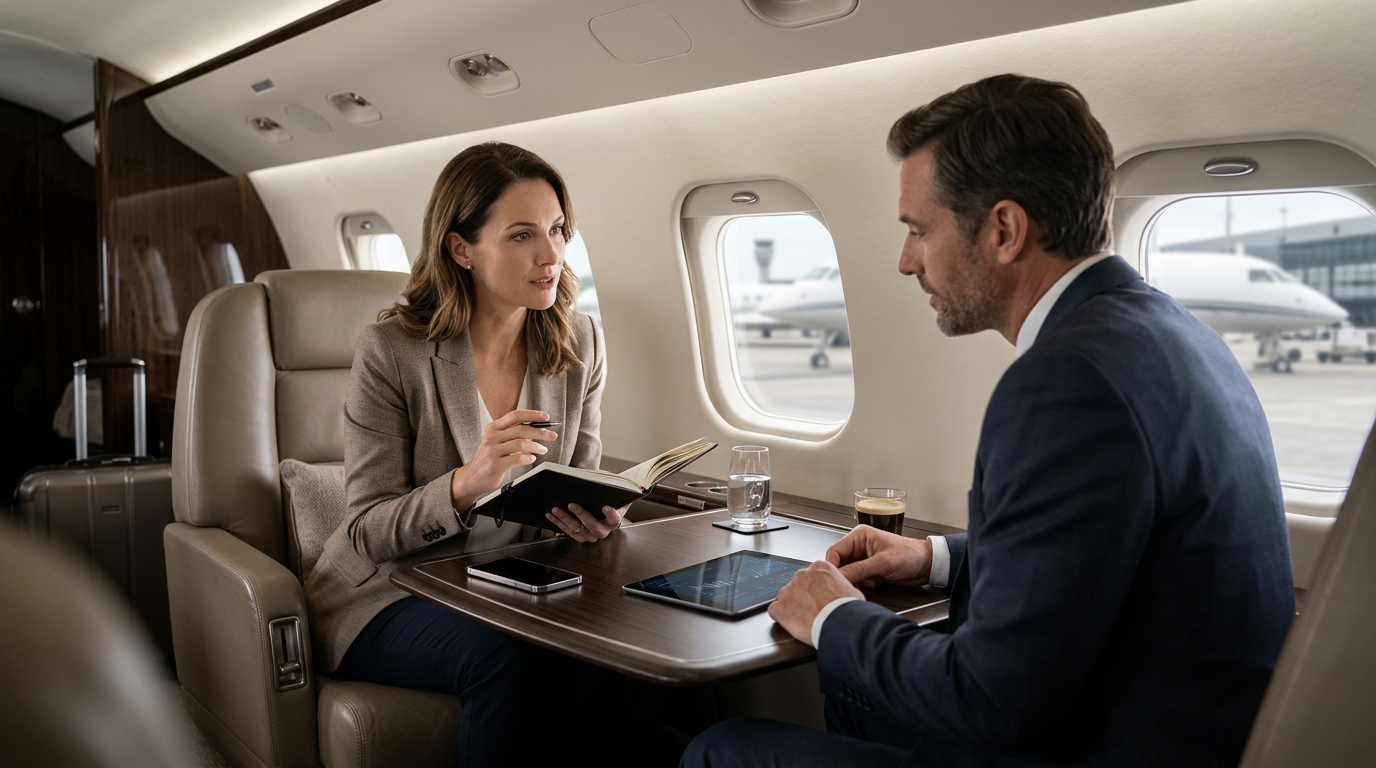
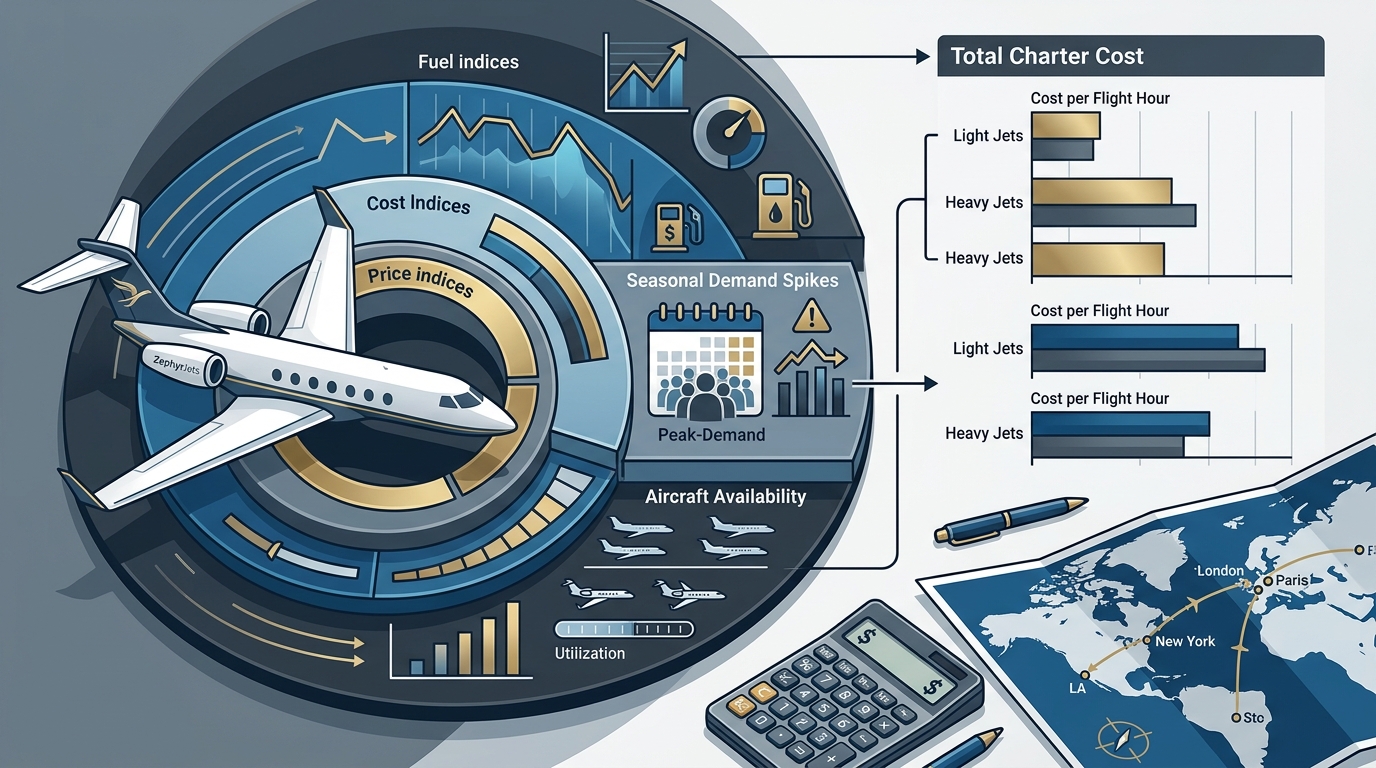
Private aviation costs have shifted significantly in the current market, with average charter rates fluctuating based on fuel indices, seasonal demand, and aircraft availability. According to recent industry data, light jet charter costs typically range from $3,500 to $6,000 per flight hour, while heavy jets can exceed $12,000 per hour. Understanding these variables is critical for corporate travel managers aiming to optimize budgets without sacrificing the efficiency that defines executive travel. This guide details the exact pricing structures, fleet categories, and strategic booking methods available through elite charter brokers.
Key Variables Influencing Charter Costs
When inquiring about private jet charter costs, it is essential to recognize that pricing is rarely a flat fee. The final quote depends on a complex matrix of operational factors. The primary driver is the aircraft category, which dictates the base hourly rate. However, secondary costs such as landing fees, hangar storage, crew overnight expenses, and de-icing fees can add thousands to the final invoice.
Another critical factor is the timing of the booking. Last-minute requests often incur premium pricing due to limited aircraft availability. Conversely, booking well in advance allows brokers to secure better rates and position aircraft closer to your departure point. Seasonality also plays a massive role; peak travel periods like Christmas, New Year's, and major industry conferences drive up demand and, consequently, prices.
Furthermore, the direction of the flight impacts cost. One-way flights may include empty leg positioning fees if the aircraft must return to its base. Understanding these dynamics allows business travelers to negotiate more effectively and choose the most economical routing for their specific needs.
Aircraft Categories and Hourly Rates
Selecting the right aircraft is the most significant decision in controlling charter costs. Each category offers distinct advantages regarding range, speed, and cabin comfort. Below is a breakdown of the primary aircraft types available for business travel.
Light Jets
Light jets are the most cost-effective option for short to medium-range trips. They typically accommodate 4 to 7 passengers and are ideal for regional business travel. Aircraft such as the Citation CJ3+ or the Learjet 75 offer speeds up to 500 mph and ranges of approximately 2,000 miles. Hourly rates for light jets generally fall between $3,500 and $6,000.
Midsize Jets
Midsize jets provide a balance of range and comfort, making them suitable for cross-country domestic travel. They can carry 6 to 8 passengers and feature standing cabins, allowing for greater mobility during the flight. Models like the Hawker 800XP or Citation XLS+ are popular choices. Hourly rates for midsize jets typically range from $6,000 to $9,000.
Super Midsize Jets
Super midsize jets offer enhanced range and performance, capable of crossing continents with fewer stops. They accommodate 8 to 10 passengers and feature full galleys and enclosed lavatories. The Challenger 350 and Gulfstream G280 are industry standards in this category. Hourly rates for super midsize jets usually range from $9,000 to $12,000.
Heavy Jets
Heavy jets are designed for long-range international travel. They can carry 12 to 16 passengers and offer luxury amenities comparable to first-class commercial cabins. Aircraft like the Gulfstream G450 or Falcon 7X provide ranges exceeding 6,000 miles. Hourly rates for heavy jets typically start at $12,000 and can exceed $15,000 depending on the specific model.
Most-Requested Business Routes and Pricing
Understanding typical costs for popular business routes helps in budgeting and planning. The following table outlines estimated pricing for common corporate travel corridors. These figures are based on current market rates and may vary based on availability and specific aircraft selection.
| Route | Aircraft Category | Estimated Cost | Flight Time |
|---|---|---|---|
| New York (TEB) to London (LHR) | Ultra Long Range | From $110,000 | 7 hours |
| Teterboro (TEB) to Aspen (ASE) | Super Midsize | From $42,000 | 4 hours 30 minutes |
| Los Angeles (VNY) to Las Vegas (VGT) | Light Jet | From $9,500 | 1 hour 05 minutes |
| Miami (OPF) to Nassau (NAS) | Light Jet | From $6,800 | 50 minutes |
| Van Nuys (VNY) to Cabo San Lucas (SJD) | Midsize | From $26,000 | 2 hours 40 minutes |
| NYC to Palm Beach (PBI) | Midsize | From $22,000 | 2 hours 45 minutes |
These estimates highlight the cost efficiency of light jets for short hops and the necessity of heavy jets for transcontinental missions. For detailed quotes on specific routes, it is recommended to consult with a specialized broker who can access real-time pricing.
Strategies to Reduce Charter Expenses
While private aviation is a premium service, there are proven strategies to reduce costs without compromising on quality or safety. One of the most effective methods is utilizing empty leg flights. These occur when an aircraft needs to reposition after dropping off passengers, and the operator offers the flight at a discounted rate, often up to 75% off the retail price.
Another strategy is booking private jet charter specials or last-minute deals. Brokers often have access to unsold inventory that can be offered at reduced rates. Additionally, considering nearby airports can significantly lower landing and handling fees. For example, choosing Teterboro over JFK in New York can result in substantial savings due to lower operational costs.
Flexibility in travel dates and times also plays a crucial role. Flying during off-peak hours or mid-week can avoid the premium pricing associated with weekends and holidays. Furthermore, understanding the breakdown of the quote is vital. A transparent broker will provide an itemized quote that includes all fees, ensuring no hidden costs such as fuel surcharges or crew expenses appear later.
Charter vs. Jet Card vs. Fractional Ownership
Businesses must evaluate whether on-demand chartering aligns with their travel volume. For companies flying less than 50 hours per year, on-demand charter is typically the most cost-effective option. It offers maximum flexibility and no long-term commitments.
For those flying between 50 and 100 hours annually, a jet card may be more economical. Jet cards provide guaranteed availability and fixed hourly rates, offering predictability in budgeting. However, they require a significant upfront investment.
Fractional ownership is suitable for high-volume travelers flying over 200 hours per year. It involves purchasing a share of an aircraft, which includes management fees and operational costs. While it offers the highest level of control and availability, the financial commitment is substantial. For most businesses, the flexibility and cost-efficiency of on-demand charter through a reputable broker like Zephyr Jets provide the best return on investment.
Key Takeaways
- Hourly Rates Vary by Category: Light jets start around $3,500/hour, while heavy jets exceed $12,000/hour.
- Empty Legs Offer Savings: Discounted flights can reduce costs by up to 75% for flexible travelers.
- Transparency is Critical: Always request itemized quotes to avoid hidden fees like fuel surcharges.
- Broker Expertise Matters: Experienced brokers leverage industry relationships to secure better rates and aircraft availability.
- Route Optimization: Choosing alternative airports can significantly lower landing and handling fees.
- Timing Impacts Price: Booking in advance or flying off-peak can yield substantial cost reductions.
- Charter is Flexible: On-demand charter eliminates the fixed costs of ownership while providing premium service.
Frequently Asked Questions
How is the cost of a private jet charter calculated?
Charter costs are primarily calculated based on the aircraft's hourly flight rate, multiplied by the estimated flight time. Additional costs include landing fees, hangar fees, crew overnight expenses, de-icing, and fuel surcharges. A transparent broker will provide a detailed breakdown of all these components.
What is the cheapest way to charter a private jet?
The most cost-effective method is booking an empty leg flight. These are one-way flights where the aircraft is repositioning, often offered at a significant discount. Another option is booking last-minute deals when operators seek to fill unsold inventory.
How far in advance should I book a private jet?
While private jets can be booked in as little as 4 hours, booking 1 to 2 weeks in advance typically yields better pricing and aircraft availability. For peak travel periods, booking several months ahead is recommended to secure the best rates.
Are there hidden fees in private jet charter quotes?
Reputable brokers provide itemized quotes that include all fees. However, it is essential to verify that the quote includes fuel, landing fees, and crew expenses. Avoid quotes that seem unusually low, as they may exclude critical costs that will be added later.
What is the difference between a light jet and a midsize jet?
Light jets are smaller, accommodating 4 to 7 passengers, and are ideal for short-range trips. They have lower hourly rates but may have range limitations. Midsize jets accommodate 6 to 8 passengers, offer more cabin space, and have greater range, making them suitable for cross-country travel.
Can I charter a private jet for international travel?
Yes, private jets can be chartered for international travel. However, this requires additional planning for customs, immigration, and overflight permits. An experienced broker will handle all logistical details to ensure a seamless journey.
Is private jet charter more expensive than commercial first class?
While the upfront cost of a private jet is higher, the total value often exceeds commercial first class when considering time savings, privacy, productivity, and access to smaller airports closer to final destinations. For business travelers, the ROI is frequently positive.
Book Your Executive Flight
Optimizing your corporate travel budget requires expert guidance and access to a vast network of aircraft. Zephyr Jets provides transparent, itemized quotes and access to over 3,500 aircraft worldwide. With 16 years of experience and a commitment to safety and service, we ensure your business travel is efficient, secure, and cost-effective. Contact our team today to receive a customized quote for your next trip.