
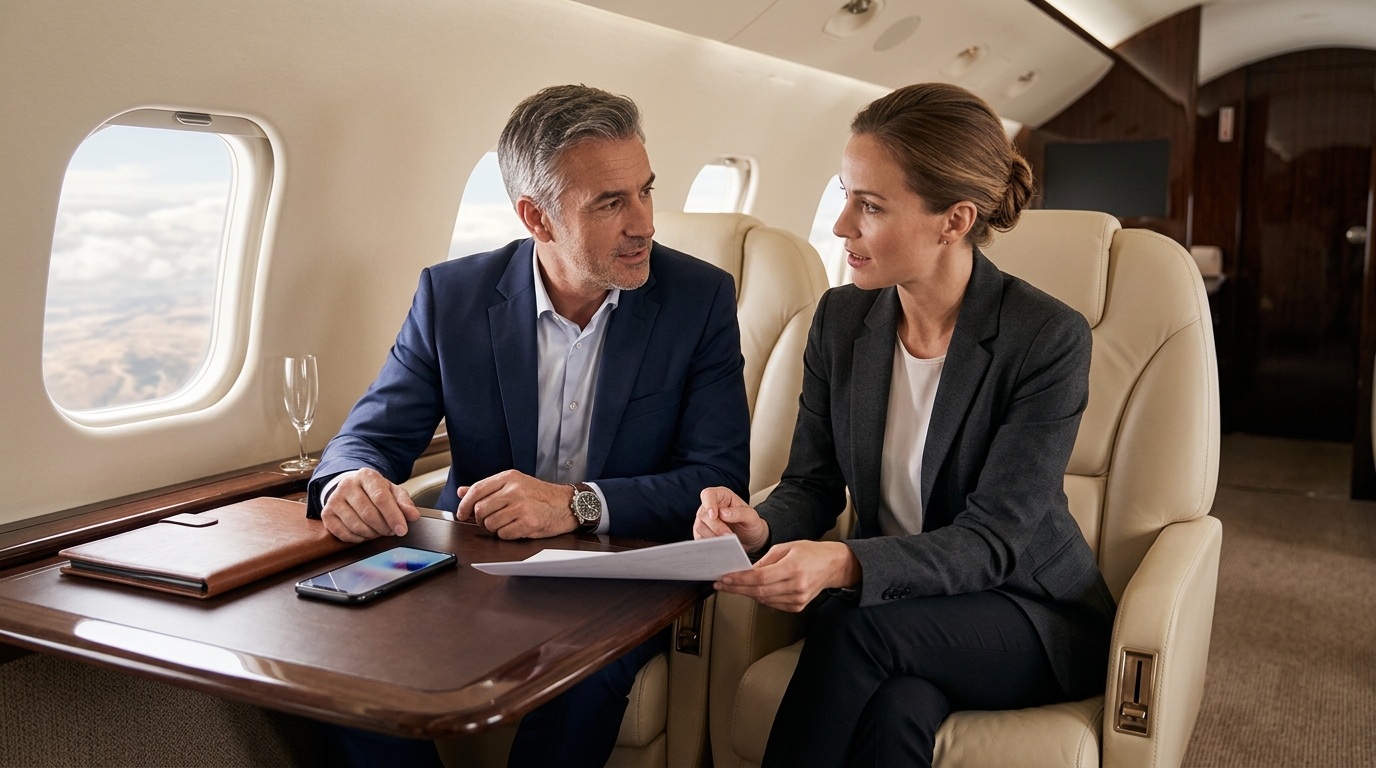
The global private aviation market is projected to reach $18.5 billion by 2026, driven by a surge in high-net-worth individuals seeking time-efficient travel solutions. Market data shows that pricing volatility is the primary concern for first-time charterers. Understanding the financial mechanics behind these quotes is essential for making informed decisions. This guide breaks down the cost differences between using a charter broker like Zephyr Jets and booking directly with an aircraft operator.
Understanding Core Pricing Models
Private jet pricing is not standardized like commercial airline tickets. It is dynamic, influenced by fuel prices, crew availability, and aircraft positioning. Industry reports indicate that fuel surcharges can fluctuate by 15% within a single quarter. To understand cost differences, we must first define the two primary pricing structures.
Hourly Charter Rate is the standard method for on-demand flights. The total cost is calculated by multiplying the aircraft's hourly rate by the flight time, plus landing fees and crew costs. This model offers flexibility but requires precise flight planning to avoid overage charges.
Positioning Fees are another critical component. If an aircraft must fly from its home base to your departure airport, you pay for that empty leg. This is a major differentiator between brokers and operators, as brokers often have access to aircraft already positioned near your location.
Broker Fees vs. Direct Operator Rates
The most significant cost difference lies in the intermediary layer. When you book directly with an operator, you are paying the raw cost of the aircraft and its operation. However, operators often have limited availability and may not offer 24/7 support for complex itineraries.
Charter brokers like Zephyr Jets act as the middleman. They negotiate rates with a vast network of over 3,500 aircraft. While this adds a layer of service, it often results in better net pricing due to volume discounts and access to empty leg flights that operators might not market effectively.
Consider the following comparison of service models:
| Feature | Direct Operator | Charter Broker (e.g., Zephyr Jets) |
|---|---|---|
| Pricing Transparency | Itemized but rigid | Flexible, negotiated rates |
| Aircraft Selection | Limited to own fleet | Access to 3,500+ aircraft |
| Support Availability | Business hours only | 24/7 operational support |
| Empty Leg Access | Minimal | Up to 75% discounts |
| Complex Itineraries | Difficult to manage | Seamless multi-leg handling |
Identifying Hidden Costs and Surcharges
Transparency is the key to comparing costs accurately. Many low-ball quotes fail to include essential fees. FAA regulations require operators to disclose landing fees, which vary significantly by airport. For example, landing at Teterboro (TEB) in New York costs substantially more than at a regional airport.
Fuel Surcharges are often added separately. A reputable broker will provide a quote that includes fuel or clearly states the fuel formula. Zephyr Jets provides itemized quotes with no hidden fuel surcharges, ensuring the price you see is the price you pay.
Crew Overnight Costs apply if the flight duration requires the crew to stay overnight. This includes hotel and meal allowances. Direct operators may charge these at premium rates, whereas brokers often have negotiated corporate rates with hotel chains.
How Aircraft Category Impacts Price
The type of aircraft is the largest variable in cost. A light jet like a Citation CJ3 costs significantly less than a heavy jet like a Gulfstream G650. Financial analysis shows that heavy jet charter rates can be 300% higher than light jets for the same distance.
Choosing the right aircraft requires understanding your group size and range needs. Zephyr Jets offers a comprehensive gallery of aircraft categories, including:
- Very Light Jets (VLJ): Ideal for short hops under 1,000 nautical miles.
- Midsize Jets: The sweet spot for transcontinental US travel.
- Heavy Jets: Necessary for intercontinental flights with full cabin comfort.
Booking the wrong aircraft size leads to wasted money. A broker can advise on the most cost-effective option that still meets your comfort requirements.

The Empty Leg Discount Strategy
Empty legs occur when a jet must fly empty to pick up a new passenger or return to base. These flights are offered at a discount, often up to 75% off. Market trends indicate that empty leg availability has increased by 20% since 2023 as operators optimize their fleets.
However, empty legs are last-minute and inflexible. Zephyr Jets monitors daily empty leg lists to find opportunities that match your route. This strategy can reduce a $50,000 flight to $12,500, making private aviation accessible to a wider audience.
Direct operators rarely publicize empty legs effectively. Brokers aggregate this data across multiple operators, increasing the likelihood of finding a suitable discount.
Analyzing Value Beyond the Base Price
Cost is not just about the number on the quote. It is about the value delivered. A lower price from an unvetted operator may result in poor service, safety risks, or last-minute cancellations. ARGUS International sets the standard for safety ratings, and only 10% of operators achieve the highest rating.
Safety Vetting is a critical cost factor. Zephyr Jets only works with ARGUS and Wyvern-rated operators. This vetting process adds value by ensuring that the aircraft is maintained to the highest standards. The cost difference is negligible compared to the risk of flying with an unvetted carrier.
Operational Support is another value driver. In the event of a mechanical issue, a broker can quickly source a replacement aircraft. A direct operator may not have the resources to do so, leading to significant delays and additional costs for the client.
Frequently Asked Questions
Do charter brokers charge extra fees?
Reputable brokers like Zephyr Jets do not charge additional fees to the client. Their commission is paid by the operator. This allows them to provide transparent, competitive pricing without hidden costs.
Why is my quote from a broker cheaper than the operator?
Brokers have negotiated rates and access to empty legs that individual clients do not. They aggregate demand to secure better pricing from operators, passing those savings on to you.
What is the average cost of a light jet charter?
The average cost for a light jet charter is approximately $3,500 to $5,000 per hour. This varies based on fuel prices and airport fees. Industry data shows that light jets are the most cost-effective option for groups of 3-5 passengers.
How do fuel surcharges work?
Fuel surcharges are calculated based on the current price of jet fuel and the flight duration. Some brokers include this in the base quote, while others add it separately. Always ask for a breakdown.
Can I negotiate the price of a private jet?
Yes, especially for empty legs or repeat business. Brokers can often negotiate with operators to secure better rates, whereas direct operators have less flexibility.
What is the difference between a jet card and a charter?
A jet card requires a pre-paid investment for guaranteed availability at a fixed rate. Charter is on-demand pricing. Zephyr Jets offers both options to suit different travel frequencies.
Are there any hidden landing fees?
Landing fees are real but not hidden. They are based on the aircraft's weight and the airport's tariff. A detailed quote will list these fees explicitly.
Book Your Flight
Understanding the cost differences between private jet providers empowers you to make smarter travel decisions. Whether you need a last-minute empty leg or a complex multi-leg itinerary, Zephyr Jets provides transparent, competitive pricing with elite service. Request a quote today to experience the difference.