

Private Jet Cost Comparison: What Top Providers Actually Charge
Chartering a private jet is one of the fastest ways to travel, but prices vary dramatically from one provider to the next. Aircraft type, route distance, seasonal demand, and hidden fees all play a role. Whether you fly a light jet from New York to Miami or a heavy cabin across the Atlantic, the difference between two quotes for the same trip can easily reach tens of thousands of dollars. This guide breaks down real pricing data, explains what drives cost gaps, and shows you how to get the best value without sacrificing safety or comfort.
Hourly Charter Rates by Aircraft Category
A private jet charter rate is the per-hour cost that covers the aircraft, a two-pilot crew, fuel, and standard insurance. In 2026, these rates reflect a market that has stabilized after post-pandemic inflationary pressures.
| Aircraft Category | Passengers | Hourly Rate (2026) | Typical Range |
|---|---|---|---|
| Turboprop | 6 - 8 | $2,000 - $3,000 | Up to 1,000 NM |
| Light Jet | 6 - 8 | $3,500 - $4,500 | 1,500 - 2,000 NM |
| Midsize Jet | 8 - 10 | $4,000 - $6,000 | 2,500+ NM |
| Super Midsize Jet | 8 - 10 | $5,000 - $8,000 | 3,000+ NM |
| Heavy / Large Cabin Jet | 10 - 16 | $8,000 - $14,000 | 4,500+ NM |
| Ultra-Long-Range / VIP Airliner | 14 - 30+ | $14,000 - $23,000+ | 6,000+ NM |
These figures come from multiple industry sources. As Paramount Business Jets notes, model-specific premiums between a newer Gulfstream G650 and an older Falcon 900 can add $200 to $2,000 per hour on top of the category baseline.
Key Factors That Drive Price Differences
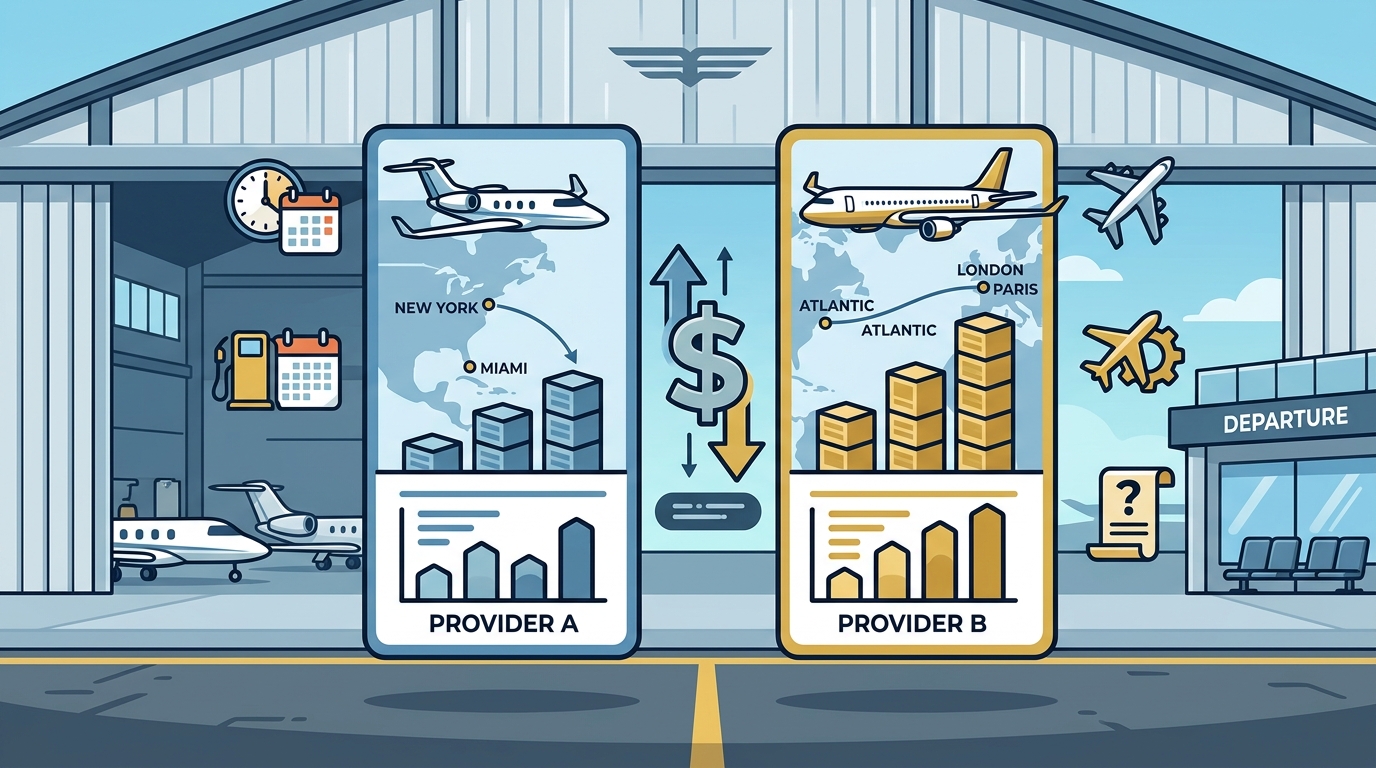
Quoting the same route through different providers can produce wildly different numbers. Understanding why helps you evaluate quotes with confidence.
Aircraft Age and Cabin Condition
An aircraft manufactured in 2024 commands a higher rate than a 2014 model. Similarly, a cabin refurbished with updated avionics and high-speed Wi-Fi carries a measurable premium, according to Elite Jets' 2026 pricing guide.
Positioning (Deadhead) Fees
A positioning fee is the cost of flying an aircraft empty to your departure airport. If the jet is based two hours away, you pay for that ferry flight. Providers with larger fleets or denser route networks, like ZephyrJets' worldwide destinations network, can minimize these charges by matching closer aircraft to your trip.
Seasonal and Event-Driven Surges
Charter prices surge 20 to 40% during Thanksgiving, New Year's, the Cannes Film Festival, and major sporting events. Booking even a week earlier on high-demand corridors makes a meaningful difference.
Popular Route Pricing Benchmarks
Real-world route costs illustrate how provider choice and aircraft selection interact. The following benchmarks reflect 2026 one-way estimates.
| Route | Aircraft Category | Estimated One-Way Cost |
|---|---|---|
| New York to Miami | Light Jet | $18,000 - $22,000 |
| New York to Los Angeles | Super Midsize | $35,000 - $42,000 |
| New York to London | Heavy Jet | $60,000 - $80,000 |
| Los Angeles to Las Vegas | Light Jet | $8,000 - $12,000 |
| Chicago to Las Vegas | Midsize Jet | $25,000 - $35,000 |
| Miami to Aspen | Super Midsize | $30,000 - $40,000 |
For transatlantic routes, ZephyrJets quotes a New York to London one-way charter in the $60,000 to $80,000 range based on availability and demand. Domestically, their Chicago to Las Vegas route highlights fares 40 to 60 percent lower than many competitors through point-to-point pricing.
Hidden Fees Most Providers Do Not Disclose Upfront
Total trip costs are often 20 to 40% higher than the base hourly rate, as noted by BlackJet's 2026 cost analysis. Common add-ons include:
- Federal Excise Tax (FET): 7.5% on all domestic FAR Part 135 charter flights, plus approximately $4.80 per segment.
- Landing and ramp fees: Vary by airport; major hubs like JFK charge substantially more than reliever airports like Teterboro.
- De-icing charges: $1,500 to $12,000+ depending on aircraft size and conditions.
- Overnight crew expenses: Billed when the crew must stay at the destination.
- International handling and overflight permits: Required for cross-border missions.
ZephyrJets takes a different approach with transparent, all-in charter specials and no hidden fees on confirmed contracts.
How Empty Leg Flights Cut Costs by Up to 75%
An empty leg flight is a private jet flying without passengers, typically repositioning after dropping off a client or heading to its next pickup. Operators discount these legs 25 to 75% below standard charter rates to recover fuel and crew costs.
ZephyrJets maintains a daily updated list of real-time empty leg flights across high-traffic city pairs. Their empty leg prices are consistently 60 percent lower than standard fares, according to their empty leg specials page. Popular corridors include New York to Fort Lauderdale, Miami to Las Vegas, and Los Angeles to Aspen.
The trade-off is flexibility. Empty legs have fixed departure dates and routes, and they appear and disappear quickly. For travelers whose schedules allow 24 to 72 hours of flexibility, however, the savings are substantial.
Brokerage vs. Operator vs. Jet Card: Which Model Saves More?
A charter broker is a company that sources aircraft from multiple operators on your behalf, giving you access to a wider fleet without owning planes directly. An operator is the company that owns and maintains the aircraft. A jet card is a prepaid program that locks in hourly rates for a set number of hours.
Broker Advantage
Brokers like ZephyrJets access 3,500+ aircraft and can match the ideal plane to each mission, often finding positioning savings that a single operator cannot. This model is especially powerful for one-way and last-minute bookings.
Jet Card Limitations
Jet cards require $50,000 to $500,000+ upfront, locking capital into a single provider. They work well for frequent flyers logging 200+ hours per year but offer less flexibility on aircraft selection and route optimization.
Best Fit
For most high-net-worth travelers flying 25 to 100 hours annually, on-demand brokerage delivers the best balance of price, aircraft variety, and scheduling freedom.
Key Takeaways
- Private jet hourly rates in 2026 range from $2,000 for turboprops to $23,000+ for VIP airliners.
- Total trip costs typically exceed base quotes by 20 to 40% once taxes, positioning, and fees are added.
- Empty leg flights offer savings of 25 to 75% for travelers with flexible schedules.
- Aircraft age, cabin condition, and fleet proximity to your departure airport all influence the final price.
- Point-to-point pricing structures, like those offered by ZephyrJets, eliminate round-trip markups on one-way flights.
- Peak seasons and major events drive charter prices up 20 to 40% above baseline.
- On-demand charter brokerage typically offers better value than jet cards for travelers flying under 200 hours per year.
Frequently Asked Questions
How much does it cost to charter a private jet per hour in 2026?
Rates range from approximately $2,000 per hour for turboprops to $14,000 or more for heavy jets, with ultra-long-range and VIP airliners exceeding $23,000 per hour. The final rate depends on aircraft type, route, and market conditions.
Why do quotes for the same route differ so much between providers?
Differences arise from fleet proximity (positioning fees), aircraft age, included versus excluded fees, broker markups, and seasonal demand. Some providers advertise base rates that exclude fuel and taxes, inflating the gap at checkout.
What is an empty leg flight?
An empty leg flight is a private jet flying without passengers, usually returning to its base or heading to its next booking. These flights are offered at steep discounts, often 25 to 75% below standard charter rates.
Are there hidden fees in private jet charter quotes?
Yes. Common extras include the 7.5% Federal Excise Tax on domestic flights, landing fees, de-icing charges, crew overnight expenses, and international handling fees. Always request an all-inclusive quote before signing.
Is a jet card or on-demand charter more cost-effective?
For travelers flying fewer than 200 hours per year, on-demand charter through a broker typically offers better value and more aircraft choices. Jet cards suit very frequent flyers who prioritize guaranteed availability and fixed rates.
How far in advance should I book a private jet?
For the best availability and pricing, book at least 7 to 10 days ahead. During holidays and peak travel seasons, booking earlier helps secure preferred aircraft and avoid surge pricing.
Can I save money by choosing a different departure airport?
Absolutely. Flying from a reliever airport like Teterboro instead of JFK can save $1,000 to $3,000 in landing fees and reduce congestion delays. Your charter specialist can recommend the most cost-effective option for your route.
Does ZephyrJets offer transparent pricing?
Yes. ZephyrJets provides clear contracts with no hidden fees, point-to-point pricing on one-way flights, and access to daily empty leg specials that can reduce costs by up to 60%. Call (212) 561-5500 for an instant quote.
Get Your Custom Private Jet Quote
Ready to see the real cost difference for your specific route? ZephyrJets' specialists are available 24/7 to provide up-to-the-minute quotes tailored to your itinerary, with transparent pricing and no hidden fees. Request your personalized quote now or call (888) 442-3131 to speak with an aviation expert today.